
Understanding Tension-Type Headaches — A Helpful Guide for Our Community
Understanding Tension-Type Headaches: A Helpful Guide for Our Community
Tension-type headaches are one of the most common forms of head pain, and they often show up at the worst possible times — during a busy workday, after hours at the computer, or when stress starts to build. If you’ve ever felt that familiar band of tightness across your forehead or the base of your neck, you’re certainly not alone. Many people in Avondale Heights and nearby areas like Essendon, Keilor East, Maribyrnong, Ascot Vale, Moonee Ponds, and Niddrie experience these headaches regularly.
In this blog, we’ll explore what tension-type headaches are, what may contribute to them, and how chiropractic care can support healthier movement and comfort.
What Are Tension-Type Headaches?
Tension-type headaches are commonly described as a dull, pressure-like discomfort around the head. They often stem from muscle tension, stress, fatigue, or prolonged postures — such as leaning forward over a laptop or looking down at devices for long periods.
Common features include:
A “band-like” pressure around the forehead or temples
Tightness through the neck and shoulders
Headaches that gradually increase throughout the day
Symptoms that arise during busy or stressful periods
These headaches can be persistent and frustrating, especially for people working desk-based roles across Avondale Heights, Essendon, and surrounding suburbs.
How Chiropractic Care May Support People With Tension-Type Headaches
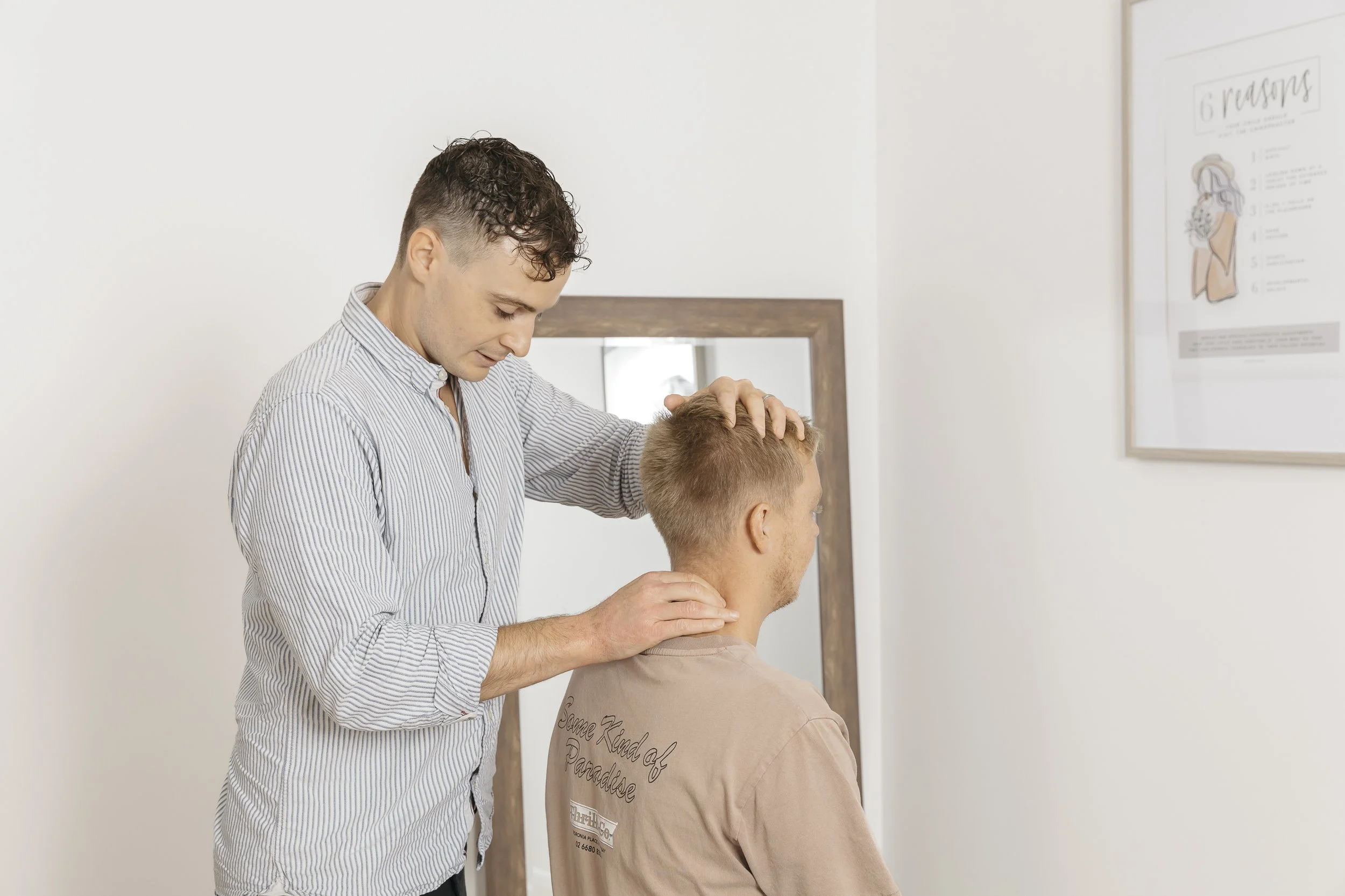
Chiropractic care focuses on the way the spine, joints, muscles, and nervous system work together. For many people, reduced movement through the neck or upper back may contribute to muscle tension, which can play a role in tension-type headaches.
Hands-on chiropractic techniques aim to improve joint mobility, ease muscular tightness, and support more comfortable movement patterns. Some research suggests that certain manual therapies may help reduce the frequency or intensity of tension-type headaches in some individuals when muscle tension or mechanical factors are involved (Biondi, 2005; Chaibi & Russell, 2012).
At Apex Chiropractic, we take a personalised approach by exploring what might be contributing — such as posture, muscle fatigue, work habits, or stress — and tailoring care to suit your needs.
Lifestyle Tips to Help Reduce Headache Frequency
Chiropractic care can play an important role, but daily habits also matter greatly. Here are a few simple strategies that may help:
1. Adjust your workstation
Small ergonomic changes — such as raising your monitor to eye level or adding lumbar support — can reduce strain on the neck and shoulders. This is especially useful for people working from home across Avondale Heights, Keilor East, Maribyrnong and surrounding areas.
2. Move regularly
A gentle stretch, a walk, or a posture reset every 30–60 minutes can help ease muscle tension before it leads to discomfort.
3. Stay hydrated
Dehydration can contribute to headaches for some people. Keeping water nearby during work or exercise can be an easy way to support overall wellbeing.
Ready to Take the Next Step?
If tension-type headaches are impacting your day-to-day routine, chiropractic care may help support more comfortable movement and reduce contributing strain.
📞 Call us at 1 300 274 493
📍 Visit us at 149 Military Rd, Avondale Heights VIC 3034
Author Bio
Dr Lachlan Archer — Chiropractor
Lachlan has experience supporting people with headaches, neck pain, lower-back pain, postural strain, and everyday musculoskeletal concerns. His approach is hands-on, educational, and centred on helping people move well, feel comfortable, and build lifelong health habits.
References
Biondi, D. M. (2005). Physical treatments for headache: A structured review. Headache, 45(6), 738–746.
Chaibi, A., & Russell, M. B. (2012). Manual therapies for primary chronic headaches: A systematic review. The Journal of Headache & Pain, 13(5), 351–359.
Biondi, D. M. (2005). Physical treatments for headache: A structured review. Headache, 45(6), 738–746.