
What Happens in the Body and Nervous System When the Spine Is Adjusted?
Many people first seek chiropractic care because of low back pain — whether it’s a sudden flare-up, ongoing stiffness, or discomfort that starts to interfere with daily activities. It’s common to wonder what actually happens inside the body when a chiropractor adjusts the spine, and how this relates to movement, comfort, and overall function.
Across Avondale Heights and nearby suburbs such as Essendon, Keilor East, Ascot Vale, Moonee Ponds, Maribyrnong and Niddrie, people often ask how spinal adjustments relate not only to low back pain, but also to the nervous system and the way the body adapts to everyday physical demands.
This article explores what research suggests may occur within the body and nervous system during and after a spinal adjustment, and why this may be relevant for people experiencing low back pain and other musculoskeletal concerns.
The Spine, the Nervous System, and Low Back Pain
The spine plays an important role in movement, posture, and communication within the body. It allows us to bend, lift, and rotate, while also protecting the spinal cord — a key part of the nervous system that helps coordinate movement and sensation.
In people with low back pain, changes are often observed in how spinal joints move, how muscles activate, and how the nervous system processes information from the lower back. Research suggests that low back pain is not only a local tissue issue, but may also involve altered movement control and sensory input within the nervous system (Hodges & Smeets, 2015).
This is why contemporary chiropractic care often looks beyond symptoms alone, focusing instead on how the spine and surrounding structures are functioning together.
What Happens During a Chiropractic Adjustment?
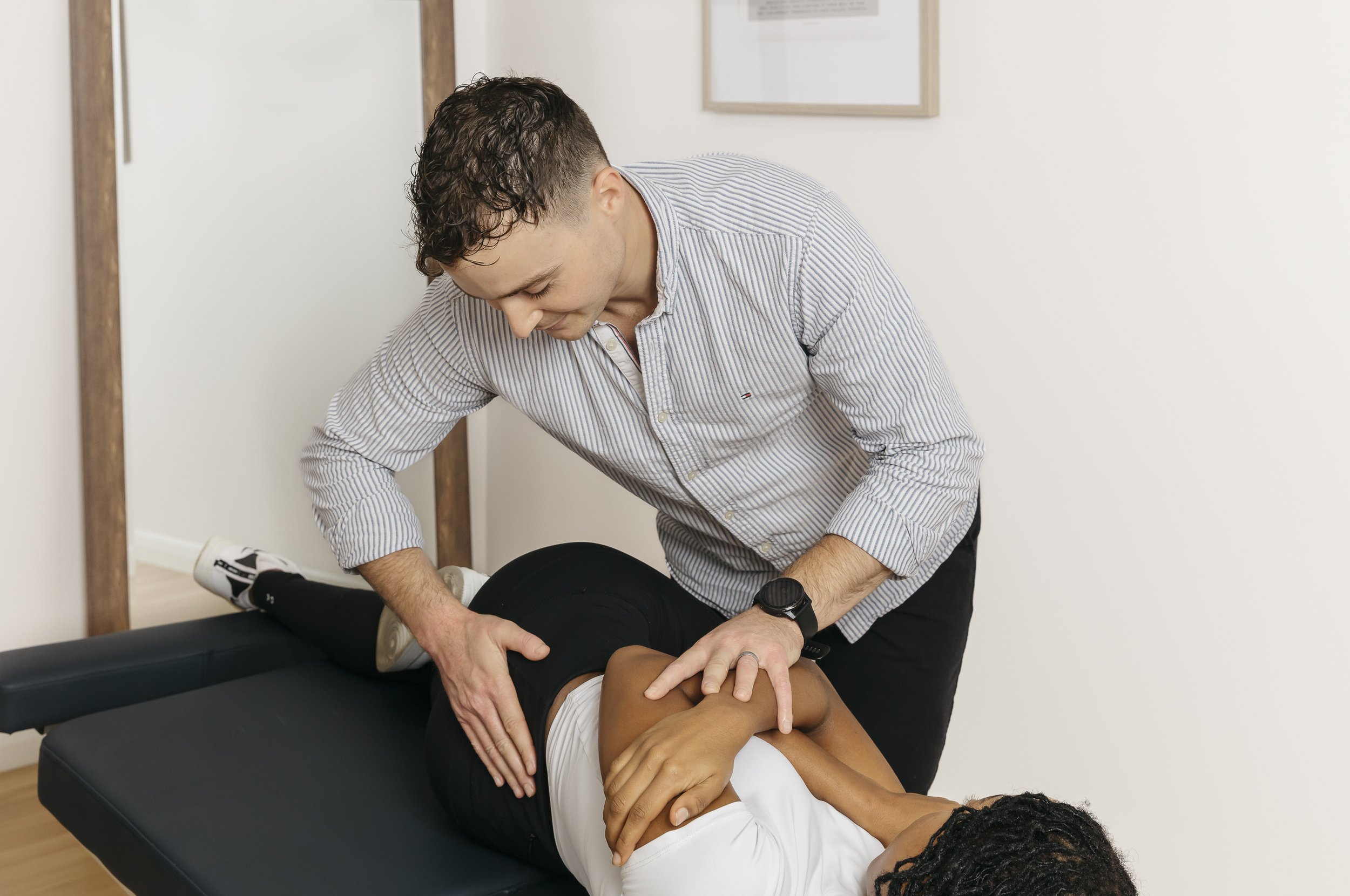
A chiropractic adjustment is a specific, controlled manual technique applied to a joint, most commonly in the spine. The intention is to address joint motion and support healthy mechanical function.
From a physiological perspective, an adjustment may:
Stimulate sensory receptors in spinal joints and surrounding tissues
Influence how movement and position information is processed by the nervous system
Reduce protective muscle guarding around areas of reduced mobility
Research has shown that spinal manipulation can influence neuromuscular responses and sensory input to the central nervous system (Pickar, 2002). For people experiencing low back pain, these responses may help support more efficient movement patterns when combined with appropriate advice and care.
How the Nervous System May Respond to Spinal Adjustment
The nervous system constantly receives information from muscles, joints, and connective tissues to help coordinate movement and posture. When spinal movement is restricted or altered, the quality of this sensory input may change.
Studies suggest that spinal adjustments can temporarily influence how the brain processes sensory information related to movement and position (Haavik & Murphy, 2012). Rather than “fixing” the nervous system, these changes may help the body better adapt to movement demands.
For some people with low back pain, this may support:
Improved awareness of movement
Reduced unnecessary muscle tension
Better coordination of spinal muscles
This understanding helps explain why chiropractic care is often combined with movement advice, posture education, and gradual activity progression — particularly for people with physically demanding or desk-based lifestyles in Melbourne’s inner-west.
A Thorough Assessment Comes First
At clinics like Apex Chiropractic in Avondale Heights, care often begins with a comprehensive assessment to better understand how the spine and nervous system are functioning.
A comprehensive assessment of spinal and nervous system function may include:
A detailed health history to understand symptoms, general health, and relevant lifestyle factors.
Observation of posture and movement patterns to identify areas of altered or restricted motion.
Physical examination of spinal and joint movement to assess mobility and mechanical function.
Neurological screening, such as reflexes, sensation, and muscle strength, where clinically appropriate.
Orthopaedic testing to help inform the assessment of joint and movement-related presentations.
Evaluation of surrounding muscles and soft tissues that may influence spinal function.
This process allows care to be tailored to the individual, rather than following a one-size-fits-all approach.

Chiropractic Care as Part of a Broader Approach
Chiropractic care does not treat conditions or diseases. Instead, it focuses on supporting physical function, movement quality, and mechanical health.
For people in Maribyrnong, Ascot Vale, Niddrie, Keilor East and Moonee Ponds, chiropractic care may form part of a broader approach that also includes movement, exercise, ergonomic considerations, and recovery strategies — particularly when managing ongoing or recurrent low back pain.
Supporting Spinal Health Beyond Adjustments
Research consistently highlights the importance of movement, strength, and recovery in managing low back pain (Hartvigsen et al., 2018). Alongside hands-on care, simple strategies that may support spinal health include:
Regular movement breaks during the day
Gradually building strength and flexibility
Addressing prolonged sitting or repetitive postures
Prioritising sleep and recovery
These strategies help support the body’s ability to adapt to everyday physical demands.
Ready to Take the Next Step?
If low back pain or movement discomfort is affecting your quality of life, chiropractic care may help support better movement and physical function.
Ready to take control of your health?
You can book an appointment online or contact Apex Chiropractic to learn more about how we support people across Avondale Heights and surrounding suburbs.
📞 Call us at 1 300 274 493
📍 Visit us at 149 Military Rd, Avondale Heights VIC 3034
References
Pickar, J. G. (2002). Neurophysiological effects of spinal manipulation. Spine.
Haavik, H., & Murphy, B. (2012). The role of spinal manipulation in addressing altered central processing. Journal of Electromyography and Kinesiology.
Hodges, P. W., & Smeets, R. J. (2015). Interaction between pain, movement, and motor control in low back pain. Journal of Orthopaedic & Sports Physical Therapy.
Hartvigsen, J. et al. (2018). What low back pain is and why we need to pay attention. The Lancet.