
Sciatica Explained: What It Is and What It Isn’t
Pain travelling from your lower back or buttock down your leg can make everyday activities like sitting, walking, driving and exercising uncomfortable. But does pain down your leg always mean you have sciatica?
Sciatica is a term used to describe pain associated with irritation or compression of the nerves that contribute to the sciatic nerve. Understanding what sciatica is, what else can cause similar symptoms, and which management options may be appropriate can help you make informed decisions about your health.
At Apex Chiropractic in Avondale Heights, we understand how frustrating persistent back and leg pain can be. This guide explains the common symptoms of sciatica, how it differs from other types of pain, and when a professional assessment may be helpful.
1. What Is Sciatica? Understanding the Symptoms
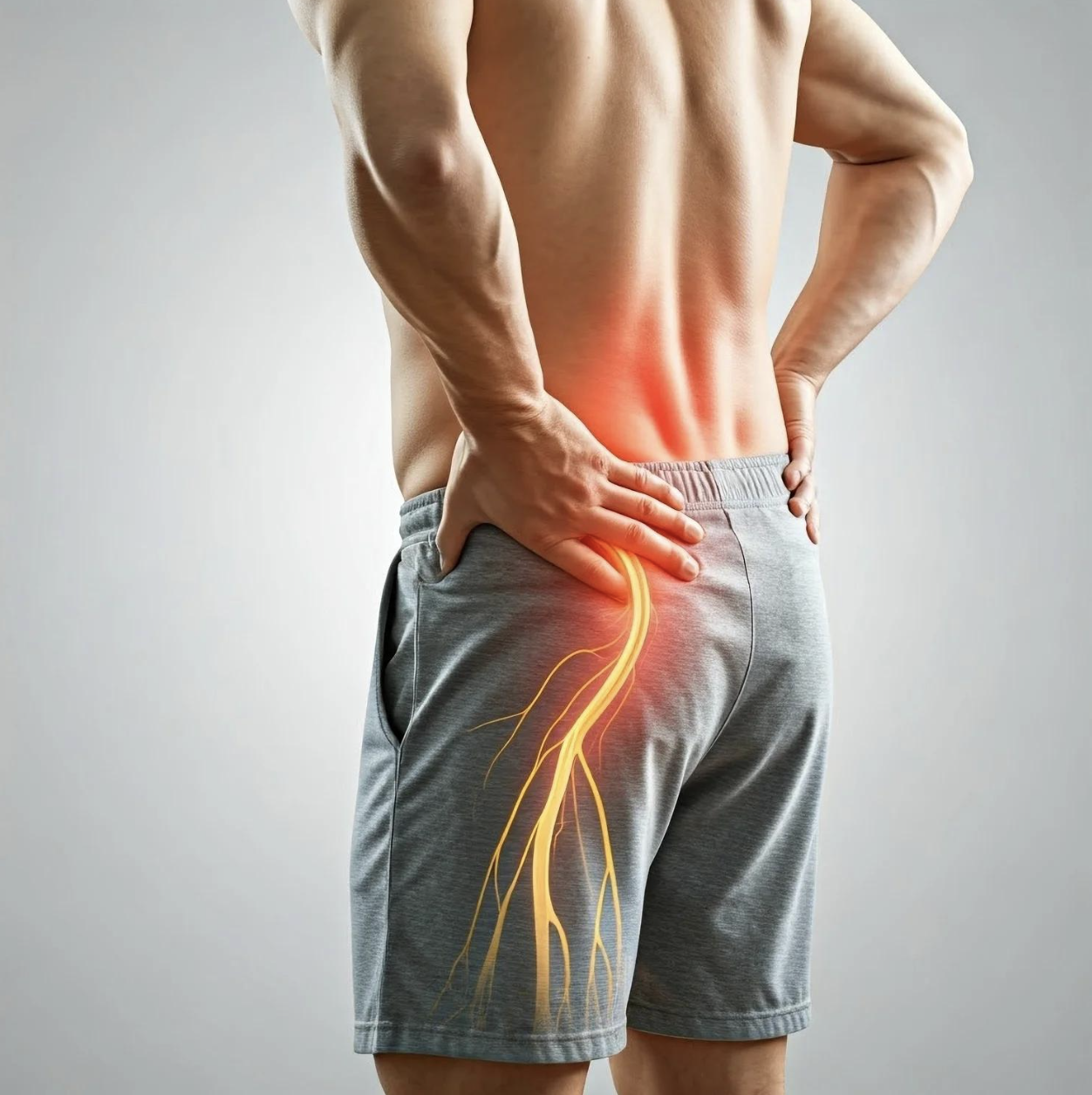
The sciatic nerve is the largest nerve in the body. It forms from nerve roots in the lower spine, travels through the buttock and down each leg, and supplies sensation and movement to parts of the lower limb.
Sciatica typically describes pain associated with irritation of one or more spinal nerve roots that contribute to the sciatic nerve. It most commonly affects one leg, although symptoms can vary.
Common symptoms may include:
Radiating leg pain: Sharp, burning, shooting or electric-like pain travelling from the lower back or buttock into the thigh, calf or foot.
Pins and needles: Tingling or altered sensation in parts of the leg or foot.
Numbness: Reduced sensation in the affected area.
Muscle weakness: Difficulty lifting the foot, standing on the toes or moving the leg normally in more significant cases.
Some people experience leg pain without much lower back pain, while others notice both.
Sciatica can have several causes. One common cause is a herniated or bulging disc irritating a nearby nerve root. Age-related changes in the spine, including narrowing around the nerves, can also contribute.
Importantly, the presence of a disc bulge on a scan does not automatically mean it is responsible for your symptoms. Assessment findings need to be considered alongside your history and clinical presentation.
2. What Sciatica Isn’t: Other Causes of Leg Pain
One of the most important things to understand about sciatica is that not all pain travelling down the leg is caused by sciatic nerve irritation.
Several conditions can produce similar symptoms, including:
Referred pain from the lower back: Structures in the lower back can contribute to pain felt in the buttock or thigh without the same pattern of nerve-related symptoms.
Hip-related pain: Problems involving the hip joint or surrounding tissues can cause discomfort in the buttock or thigh.
Muscle-related pain: Irritation or sensitivity in the gluteal and other surrounding muscles can produce pain that resembles sciatica.
Other nerve conditions: Irritation of nerves outside the spine can cause tingling, numbness or pain in the leg.
These conditions may overlap, which is why the location of your pain alone cannot confirm a diagnosis.
A thorough assessment considers your symptoms, medical history, movement, strength, sensation and relevant neurological findings. Depending on the presentation, referral to another healthcare professional or further investigation may be appropriate.
Imaging, such as an MRI, is not routinely required for every person with back or leg pain. It may be considered when the findings are likely to change management or when there is concern about a more serious condition.
3. Managing Sciatica: What Can Help?
The most appropriate approach depends on the cause, severity and duration of your symptoms. Many people with uncomplicated episodes of lower back and leg pain improve over time, although recovery varies.
Several strategies may help you manage symptoms and maintain function.
Stay gently active. Prolonged bed rest is generally discouraged. Where possible, continue with comfortable daily activities and gradually build back towards your usual routine. Short walks or changing positions regularly may be more manageable than remaining in one position for long periods.
Adapt activities temporarily. If sitting, lifting or certain exercises aggravate your symptoms, consider modifying the activity rather than stopping all movement. Gradually return to more demanding activities as your symptoms allow.
Consider an individualised exercise plan. Exercises can be selected according to your symptoms, movement tolerance and functional goals. A healthcare professional can help determine which activities are suitable and how to progress them.
Seek an appropriate assessment. If pain persists, repeatedly returns, affects your sleep or limits your daily activities, a qualified healthcare professional can help assess possible causes and discuss management options.
Can chiropractic care help with sciatica?
Chiropractic care may be one option to consider for some people with lower back pain and related leg symptoms, depending on the clinical findings and individual circumstances.
An initial appointment at Apex Chiropractic involves discussing your symptoms and medical history, followed by an appropriate examination. This may include assessing movement, strength, sensation and neurological function where indicated.
If chiropractic management is considered suitable, options may include advice, exercise recommendations and manual therapy as part of a broader management plan. Spinal manipulation is not appropriate for everyone, and the potential benefits, risks and alternatives should be discussed before treatment.
Research into spinal manipulation specifically for sciatica remains uncertain. A 2024 systematic review and meta-analysis found that the available evidence was of low to very low certainty, so outcomes cannot be guaranteed. The appropriate approach is to consider the evidence alongside your individual presentation and preferences.
The aim is to help you understand your symptoms, make informed decisions and work towards meaningful goals, such as walking more comfortably, returning to exercise or managing everyday activities.
4. When Should You Seek Medical Attention?
Although many episodes of back and leg pain are not caused by a serious condition, certain symptoms require urgent assessment.
Seek emergency medical care immediately if you develop:
New difficulty controlling your bladder or bowel.
Difficulty passing urine or an inability to urinate.
Numbness around the groin, genitals or inner thighs (sometimes called saddle numbness).
Severe or rapidly worsening weakness in one or both legs.
These symptoms can indicate serious nerve compression, including cauda equina syndrome, which requires urgent assessment.
Seek prompt medical advice for progressive weakness, fever with back pain, significant trauma, or back pain accompanied by other concerning symptoms.
If you are unsure whether your symptoms need urgent attention, contact a medical professional rather than assuming they are sciatica.
Looking for Sciatica Assessment in Avondale Heights?
If you are experiencing lower back pain, pain travelling down your leg or recurring symptoms that are affecting your daily routine, understanding the likely cause is a sensible place to start.
At Apex Chiropractic, Avondale Heights, we take an individualised approach to assessing back and leg symptoms and discussing appropriate management options. Chiropractic care may be suitable for some presentations, while others may require medical assessment or referral.
If you live in Avondale Heights or nearby suburbs such as Essendon, Keilor East, Ascot Vale, Moonee Ponds, Maribyrnong or Niddrie, you can learn more about our services or book an appointment online.
Ready to discuss your symptoms? Visit our online booking page to arrange an appointment at Apex Chiropractic.
This article provides general health information and is not a substitute for an individual assessment or medical advice. Chiropractic treatment is not appropriate for everyone, and individual responses to treatment vary.
📍 Visit us at 149 Military Rd, Avondale Heights VIC 3034